
Pet Ultrasound
At College Hills Veterinary Hospital, we feature advanced vet ultrasound services, including dog ultrasound and cat ultrasound, to help diagnose and monitor a wide range of health conditions via non-invasive imaging.
What Is a Vet Ultrasound?
A vet ultrasound is a diagnostic imaging technique that uses sound waves to create real-time images of your pet’s internal structures. Unlike X-rays, ultrasound does not use radiation, making it a safe and painless option for evaluating many medical conditions.
Dog ultrasound and cat ultrasound are commonly used to examine abdominal organs such as the liver, kidneys, spleen, and gallbladder. This technology can also be used to monitor pregnancy, assess fetal health, and evaluate the heart’s function and blood flow.
How Ultrasound Helps Diagnose Health Conditions
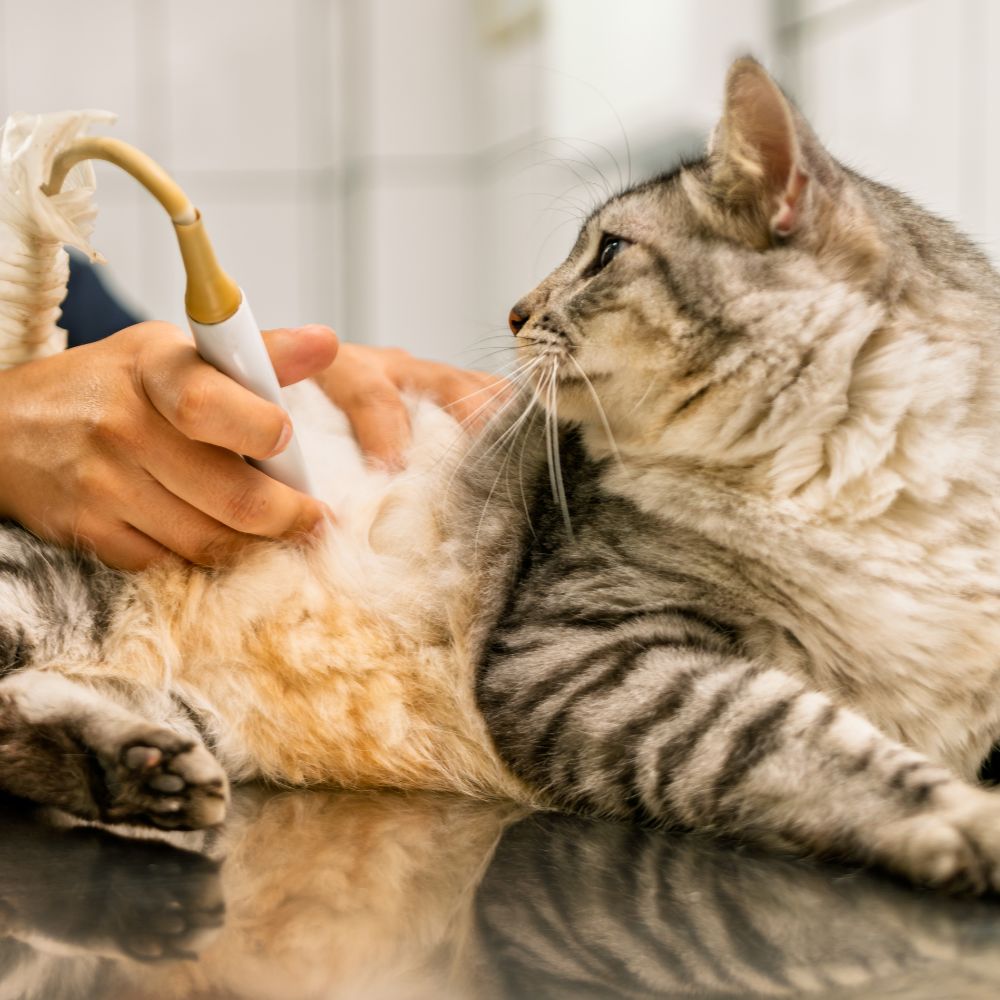
During a vet ultrasound, a small handheld probe is gently placed against your pet’s skin. The probe sends out sound waves that bounce off internal structures, creating detailed images on a screen in real time.
Ultrasound is especially helpful for:
- Evaluating abdominal organs and detecting abnormalities
- Monitoring pregnancy and fetal development
- Assessing heart function, including valve movement and blood flow
- Identifying tumors or masses and helping determine severity
- Guiding further diagnostics or treatment planning
Because ultrasound provides real-time imaging, it allows veterinarians to observe how organs are functioning—not just how they look—offering a deeper understanding of your pet’s condition.
Advanced Imaging with Compassionate Care
At College Hills Veterinary Hospital, we are committed to providing high-quality diagnostic care through advanced tools like dog ultrasound and cat ultrasound. Our team uses this technology to support accurate diagnoses while keeping your pet comfortable throughout the process.
Ultrasound is completely non-invasive and generally well-tolerated, making it an excellent option for pets who may need ongoing monitoring or evaluation. We take the time to explain findings clearly so you can feel informed and confident about your pet’s care.
FAQs About Pet Ultrasound
Is ultrasound safe for pets?
Yes. Vet ultrasound uses sound waves instead of radiation, making it a safe and non-invasive diagnostic tool.
Will my pet need to be sedated?
Most pets do not require sedation, though it may be recommended in certain cases to keep them still for accurate imaging.
What conditions can ultrasound detect?
Ultrasound can help evaluate organs, detect tumors, monitor pregnancy, and assess heart function.
How long does an ultrasound take?
The procedure is typically quick, though the exact time may vary depending on what is being evaluated.
Will I get results right away?
In many cases, results can be reviewed during your visit, though some findings may require further evaluation.

Clear Insight into Your Pet’s Health
Advanced imaging plays a vital role in understanding your pet’s internal health. Through vet ultrasound, including dog ultrasound and cat ultrasound, our team can evaluate organ function, detect abnormalities, and guide effective treatment decisions. At College Hills Veterinary Hospital, we are proud to support pets throughout the greater College Station area with safe, non-invasive diagnostics and thoughtful veterinary care.