Pet Radiology (X-rays)
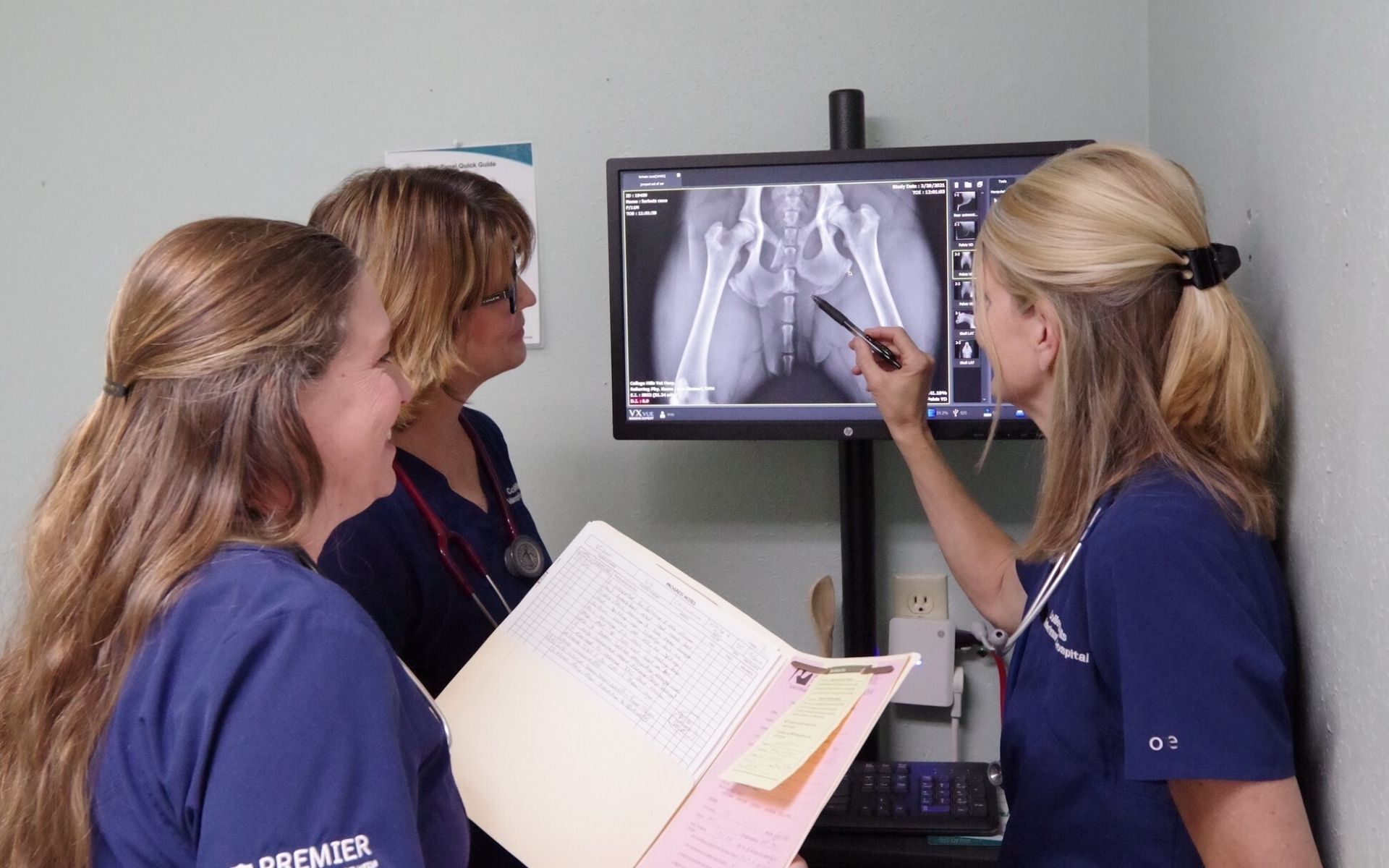
College Hills Veterinary Hospital features advanced veterinary radiology and pet imaging services, including safe and effective pet X-rays for dogs and cats. Our team uses diagnostic imaging to evaluate your pet’s internal health and identify conditions that may not be visible during a physical exam.
What Is Veterinary Radiology?
Veterinary radiology, commonly known as X-rays, is a diagnostic tool that allows veterinarians to look inside your pet’s body. These images help evaluate bones, organs, and internal structures, providing critical information for diagnosing a wide range of medical conditions.
Radiographs are painless, non-invasive, and use very low levels of radiation, making them safe for pets of all ages—including young animals and even pregnant pets. By identifying changes in organ size, shape, or position, pet X-rays help detect issues early and guide effective treatment decisions.

How Pet Imaging Helps Diagnose Health Conditions
Our pet imaging services play a key role in diagnosing and monitoring many different conditions. During an X-ray, your pet is carefully positioned so we can capture clear images of the area being evaluated. The process is quick, and most pets tolerate it very well.
Veterinary radiology can be used to evaluate:
- Bones and joints for fractures, arthritis, or injuries
- The heart and lungs for signs of disease or abnormalities
- Abdominal organs such as the liver, kidneys, and bladder
- Gastrointestinal issues like blockages or foreign objects
- Tumors or masses that may not be visible externally
- Conditions such as bladder stones, spinal concerns, or chronic disease
These detailed images allow our veterinarians to make more accurate diagnoses and develop treatment plans tailored to your pet’s specific needs.
Diagnostic Imaging You Can Trust
At College Hills Veterinary Hospital, our approach to veterinary radiology combines modern diagnostic tools with compassionate care. Our experienced team is trained to perform pet X-rays safely and efficiently while ensuring your pet remains as comfortable and stress-free as possible.
We understand that diagnostic testing can feel overwhelming, which is why we take the time to explain findings clearly and discuss next steps. By using advanced pet imaging techniques alongside a thoughtful, individualized approach, we are able to provide high-quality care that supports better outcomes for your pet.
FAQs About Pet Radiology
Are X-rays safe for my pet?
Yes. Pet X-rays use very low levels of radiation and are considered safe for pets, including young and pregnant animals, when necessary.
Will my pet need to be sedated for X-rays?
Most pets do not require sedation, but in some cases—such as when precise positioning is needed—it may be recommended for safety and accuracy.
What conditions can X-rays help diagnose?
X-rays can help detect fractures, arthritis, tumors, organ enlargement, blockages, bladder stones, and other internal conditions.
How long does a pet imaging appointment take?
The imaging process itself is usually quick, though total appointment time may vary depending on your pet’s needs and whether additional diagnostics are recommended.
Will I get results right away?
In many cases, we can review and discuss results with you during your visit. Some findings may require additional evaluation.
Clear Answers Through Advanced Imaging
Diagnostic imaging plays a vital role in understanding your pet’s health. Through veterinary radiology, pet imaging, and pet X-rays, our team is able to identify concerns early and guide thoughtful treatment decisions. At College Hills Veterinary Hospital, we are proud to support pets and their families throughout the greater College Station area with careful, accurate diagnostics and compassionate veterinary care.