
Bad Breath in Dogs and Cats: An Important Indicator of Oral Health
Bad breath in dogs and cats is easy to notice but often harder to interpret. While a mild odor after eating is normal, persistent or unpleasant breath typically signals that something is changing inside the mouth. Because dental health plays a significant role in a pet’s overall well-being, recognizing these early changes is an important part of preventive care.
At College Hills Veterinary Hospital, dental care is a major focus of our practice. According to the American Veterinary Medical Association, most dogs and cats show signs of dental disease by the age of three. Identifying dental concerns early, and addressing them appropriately, helps maintain comfort, health, and longevity for the pets in your family.
Why Dental Problems Lead to Bad Breath
The most frequent cause of bad breath in dogs and cats is the buildup of plaque and tartar. Plaque develops naturally on the teeth every day. When it is not removed, it hardens into tartar and creates a rough surface where bacteria easily attach and multiply. As bacteria feed on plaque and tartar, they release compounds that cause noticeable odor.
This process can irritate the gums, contribute to inflammation, and eventually lead to infection or pain. Pets instinctively hide discomfort, so dental disease may progress quietly until odor becomes one of the first signs owners observe.
Common Dental Issues Associated with Bad Breath
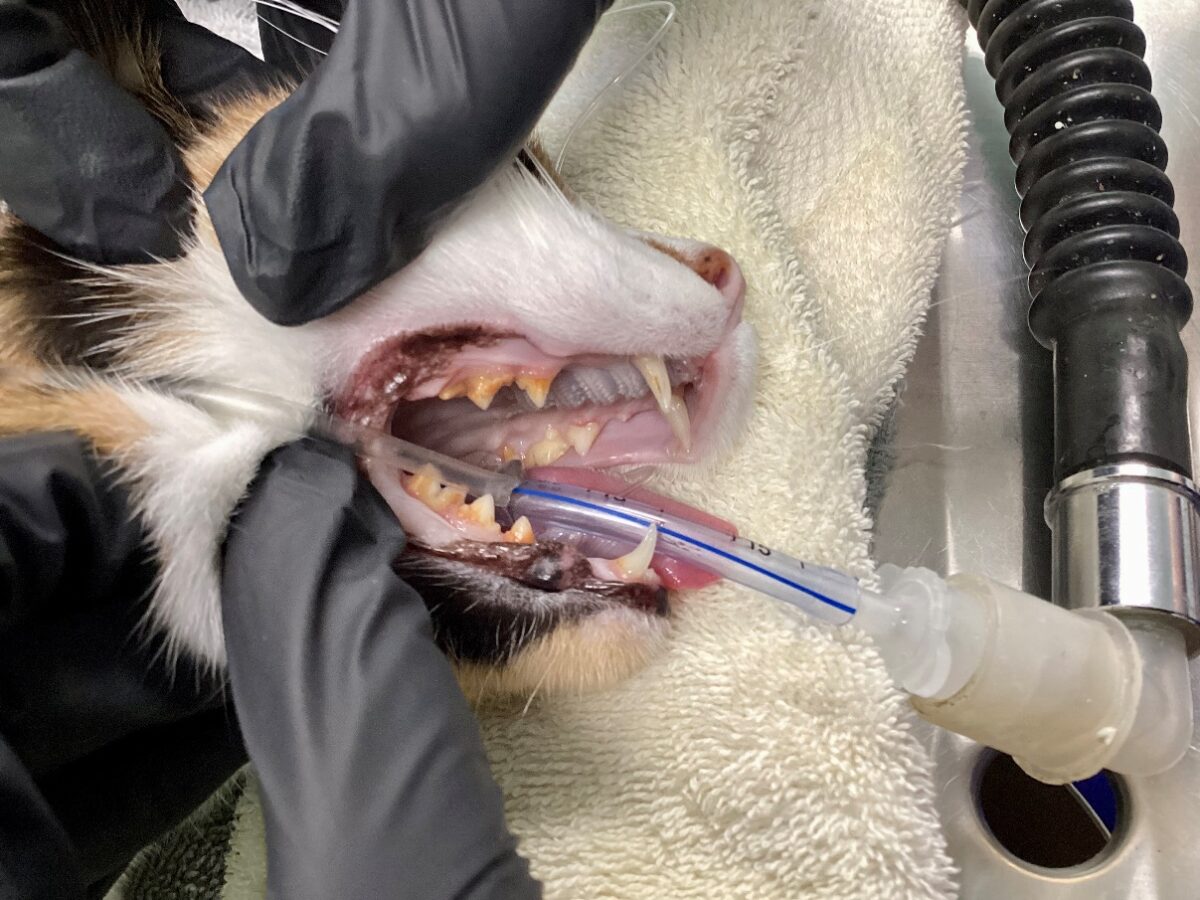
Bad breath may indicate the presence of:
- Plaque and tartar accumulation
- Red or inflamed gums
- Infected or fractured teeth
- Gum recession
- Tooth root infections
Advanced dental disease can affect more than the mouth. Oral bacteria can enter the bloodstream and place added strain on internal organs such as the heart, liver, and kidneys.
When Bad Breath Should Prompt a Veterinary Visit
A consistent or worsening odor should never be ignored. Contact College Hills Veterinary Hospital if your pet’s breath:
- Has a strong or persistent smell
- Appears to worsen over time
- Is accompanied by red or irritated gums
- Causes your pet to chew differently or drop food
- Leads to pawing at the mouth or changes in behavior
Cats are especially subtle in showing discomfort, making regular dental evaluations especially important for them.
Could the Odor Be Caused by Something Other Than Dental Disease?
Yes. Digestive or metabolic conditions can sometimes contribute to changes in breath. A dental evaluation helps determine whether the source is within the mouth or whether additional testing may be helpful. However, dental issues remain the most common cause of chronic bad breath in dogs and cats.
Supporting Your Pet’s Dental Health at Home
At-home dental care cannot replace professional cleanings, but it does help maintain oral health between visits. Brushing with pet-safe toothpaste and using veterinarian-recommended dental products can slow plaque accumulation and support gum health.
For additional guidance, you can visit the American Veterinary Medical Association’s Pet Dental Care page.
Advanced Dental Care for Dogs and Cats

Dentistry is an important part of what we do at College Hills Veterinary Hospital. We use a state-of-the-art veterinary dental machine, similar to the equipment your own dentist uses to clean your teeth, to provide thorough and effective dental cleanings for dogs and cats. Our dental services include:
- Comprehensive oral examinations
- Professional teeth cleaning and polishing
- Full-mouth dental X-rays when indicated
- Tooth extractions when necessary
- Oral surgery for advanced dental conditions
- Guidance on at-home dental care for dogs and cats
This combination of technology, diagnostics, and clinical experience allows us to address visible dental concerns and detect issues that may be developing below the gumline. Our goal is to support good dental hygiene and help your pet maintain a healthier, more comfortable life.
Schedule a Dental Evaluation
Bad breath may be an early indicator of dental changes, but it represents only part of your pet’s oral health. Dental disease can progress quietly, even when pets continue to eat or behave normally. Regular dental evaluations allow us to identify concerns early, prevent discomfort, and support long-term wellness.
If you have noticed changes in your dog’s or cat’s breath, or if it is time for a routine dental check, our team at College Hills Veterinary Hospital is committed to providing the professional, attentive care your pet deserves.
